Binance has stopped serving the EU — here's what it means for your account
From 1 July, Binance wound down its services for EU users after failing to secure an EU licence under the MiCA rules. If you have an account, the question that matters isn't the licence drama — it's whether your money is stuck. The short answer: you can't buy or deposit, but you can still withdraw.
 RewardHunter Who I am → 14 Jul 2026 · 4 min · 3 sources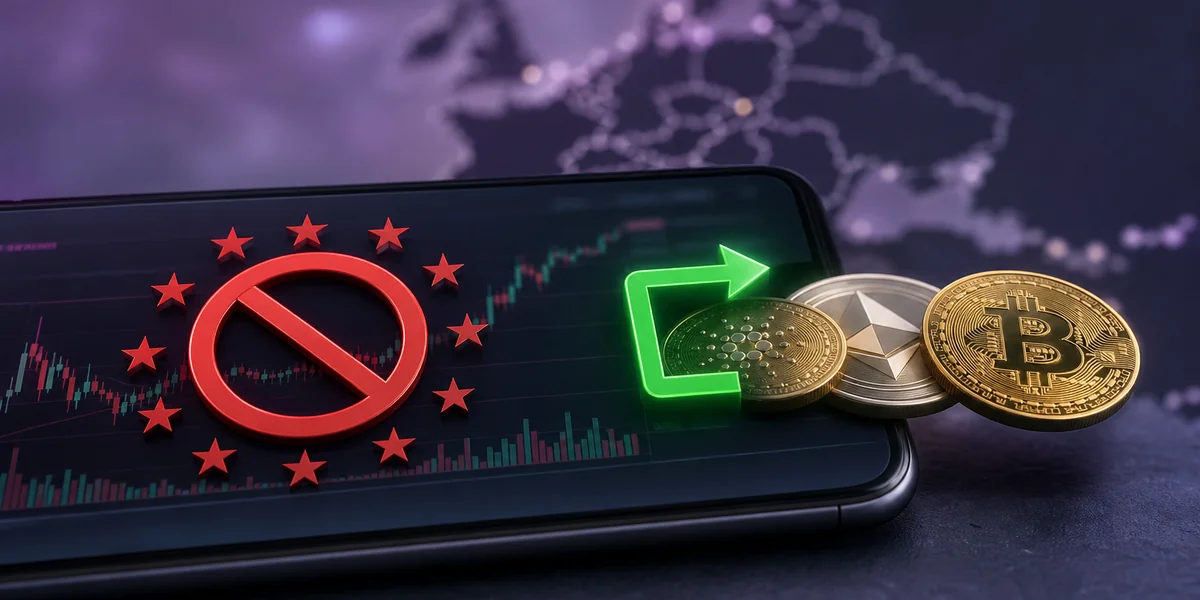
Key takeaways
- From 1 July 2026, EU users can no longer sign up, deposit or place new trades on Binance.
- Your existing balance is NOT frozen — you can still withdraw it or move it to a licensed provider during the wind-down.
- Binance says it will get an EU licence 'in the coming months' — after a gap, so don't wait on it to move funds you need.
Binance — the world's biggest crypto exchange — stopped serving EU users on 1 July 2026, after it failed to secure a licence to operate under the EU's new crypto rules. If you don't have an account there, it's a regulatory story. If you do, there's really only one question that matters: is my money stuck? So let's answer that first, then explain how it happened.
What actually changes for your account
The important distinction, and the one the headlines mostly buried: this is a lock-out on new activity, not a freeze on your money.
From 1 July, EU users can no longer sign up, deposit, or place new trades on Binance. What you can still do is withdraw your existing balance or move it to a licensed provider. Binance's own wording is that "your assets remain safe and secure, and will remain accessible at all times." In other words, your funds aren't seized, frozen or lost — the door to new business is shut, but the door to your money stays open during the wind-down (the orderly shutdown period where a firm stops new business but keeps letting existing customers get their money out).
So there's no need to panic. The sensible move is the calm one: decide where you want your balance to go and move it on your own timing, while withdrawals are open — rather than either rushing or, worse, waiting indefinitely for something to reopen.
How Binance ended up here
The rulebook is MiCA — the EU's Markets in Crypto-Assets regulation, the single set of rules that, from mid-2026, requires any crypto firm serving EU customers to hold a proper licence. The specific one an exchange needs is a CASP licence (Crypto-Asset Service Provider). Get it in one EU member state and you can "passport" it across the whole EU; hold it in none, and you can't legally serve EU users at all after the deadline.
That deadline — the point where the transition period ended and the rule was fully enforced — was 1 July 2026. About a week before it, on 24 June, Binance withdrew its CASP licence application in Greece (with the Hellenic Capital Market Commission). With no MiCA licence in any member state by the cutoff, it had to wind down EU services.
The wrinkle worth knowing
Binance calls the Greek move a voluntary withdrawal. That's the tidy version. A Reuters report said Greece's regulator was in fact preparing to reject the bid, citing concerns about the firm's history — so "we withdrew" and "they were about to say no" can describe the same outcome. It's worth holding both framings rather than taking the press-release one at face value.
Binance says it will reapply through another EU member state — reported by the Financial Times to be France, though Binance itself only named "another member state," so treat the country as a report, not a confirmed fact — and expects an EU licence "in the coming months." By definition, that lands after the 1 July cutoff, which means a coverage gap. If you were counting on Binance staying available to you in the EU, that gap is the thing to plan around now.
If you hold funds on Binance in the EU, would you rather move them somewhere licensed today, or wait on a licence that may or may not arrive on the timeline promised? That's the real decision this puts in front of you, and it's yours to make. This is a regulatory and account-access observation, not a recommendation of Binance or of any alternative venue — we don't recommend where to move your money — and crypto itself carries a high risk of rapid loss regardless of where it's held. For the exact terms of the wind-down, read Binance's own notice and the primary coverage linked below.
Bottom line
This is a lock-out on new activity, not a freeze on your money — and that distinction is the whole story for an account holder. You lose the ability to buy, deposit and sign up from 1 July, but your existing balance stays withdrawable and transferable during the wind-down. Binance frames its Greek licence withdrawal as voluntary; a Reuters report says the regulator was preparing to reject it. Either way, if you hold funds on Binance in the EU, the practical move is to decide calmly where they go — not to panic, and not to wait on a promised future licence.
Sources
If a guide saved you time, you can buy me a coffee — no strings.
Buy me a coffeeComments
Comments appear after approval.